
License plates identify motorcycles registered in Kansas and provide visible registration information for road use. Kansas motorcycle plates have specific formatting, display, and registration requirements that riders need to follow. The Kansas Department of Revenue oversees motorcycle registration and plate issuance, with rules covering plate placement, renewal, replacement, and registration documentation. Riders can also encounter different plate options based on vehicle classification and eligibility. Knowing the applicable Kansas motorcycle license plate requirements helps owners keep their motorcycles properly registered and avoid issues related to plate display or expired registration.
License plates for motorcycles serve as an important part of vehicle registration in Kansas. Motorcycle owners need to meet state requirements for obtaining, displaying, renewing, and replacing their plates. Kansas motorcycle registration connects the plate with the vehicle and its registered owner, making accurate paperwork and current registration important for lawful road use. Information about motorcycle plate fees, renewal periods, replacement procedures, plate numbers, and display requirements can help riders maintain valid registration. This page covers key details related to Kansas motorcycle plates in a clear and practical format.
How to Get a Kansas Motorcycle License Plate
Getting a Kansas motorcycle license plate involves confirming ownership, completing motorcycle registration, paying the required vehicle fees, and displaying the plate correctly. The process is handled through the appropriate county treasurer’s office, which processes registration paperwork and issues the motorcycle tag. Having the required documents ready can make the registration process more straightforward.
- Kansas Department of Revenue — Vehicle Tags, Titles and Registration:
- https://www.ksrevenue.gov/dovtitle.html
- Establish Motorcycle Ownership: Proof of ownership is required as part of the Kansas motorcycle registration process. The vehicle title serves as an official ownership record and provides important information about the motorcycle and its owner.
- Complete Title and Registration Requirements: The motorcycle owner must complete the required title and registration paperwork. According to the Kansas Department of Revenue, vehicle title and registration matters are handled through the appropriate county treasurer’s office.
- Visit the Appropriate County Treasurer: The owner should contact or visit the relevant county treasurer’s office for motorcycle registration and tag-related paperwork. County treasurers handle vehicle titles, registrations, tags, and other related vehicle transactions.
- Pay Required Vehicle Fees: Applicable registration fees and other vehicle-related charges may be required during registration. The exact amount depends on the motorcycle and the specific registration circumstances.
- Receive the Motorcycle License Plate: After the required registration steps are completed, the county treasurer’s office issues the motorcycle license plate or tag. The website itself does not issue plates; the plate is provided through Kansas’s authorized vehicle registration process.
- Display the Plate Correctly: The motorcycle owner should securely attach the issued motorcycle license plate to the motorcycle in the required location. The plate number and identifying information should remain clearly visible and unobstructed.
Motorcycle Registration Requirements
Kansas motorcycle registration connects several parts of the vehicle ownership process. The motorcycle title establishes ownership, and the registration process records the motorcycle for legal operation on Kansas roads. After the required title and registration steps are completed, the motorcycle owner receives registration credentials and a motorcycle tag or license plate through the state registration system. Kansas Department of Revenue records show that title and registration applications are handled through the county treasurer’s office in the county where the motorcycle is garaged. Vehicle registration generally must be completed within 60 days of purchase or assignment of the title to the new owner to avoid a penalty.
What Documents Are Needed to Register a Motorcycle in Kansas?
The documents required for Kansas motorcycle registration can vary based on the transaction, such as a new purchase, used motorcycle purchase, ownership transfer, or an out-of-state vehicle. A motorcycle title or other acceptable ownership documentation is central to the process. The owner may need a completed title assignment, registration application, proof of insurance, and documentation related to sales tax or property tax. Identification and other supporting information may be requested based on the transaction. For a used vehicle, the Kansas Department of Revenue lists the assigned title, current proof of insurance, sales tax information, and property tax payment among the information presented to the county treasurer’s office. New vehicles can involve different paperwork, such as a manufacturer’s statement or certificate of origin. This means motorcycle owners should confirm the documents applicable to their specific registration situation rather than relying on one universal checklist.
Where Do You Register a Motorcycle in Kansas?
Kansas motorcycle registration is handled through the county treasurer’s office in the county where the motorcycle is garaged. Local motor vehicle offices process title and registration applications, vehicle tags, and related transactions. The Kansas Division of Vehicles oversees the state vehicle registration system, with county treasurers handling many registration transactions at the local level. Motorcycle owners can contact their county treasurer’s motor vehicle office for transaction-specific requirements, forms, fees, and registration procedures.
When Should a Motorcycle Be Registered?
Kansas registration timing depends on how the motorcycle was acquired. For a newly purchased vehicle, the Kansas Department of Revenue states that registration should be completed within 60 days of purchase to avoid a penalty. For an ownership transfer, Kansas law provides a 60-day period for the new owner to apply for registration or reregistration. During that period, operation generally requires temporary registration from the county treasurer or dealer. Kansas law further provides specific rules for transferring an existing motorcycle registration and license plate to another motorcycle.
What Do Motorcycle License Plates Look Like?
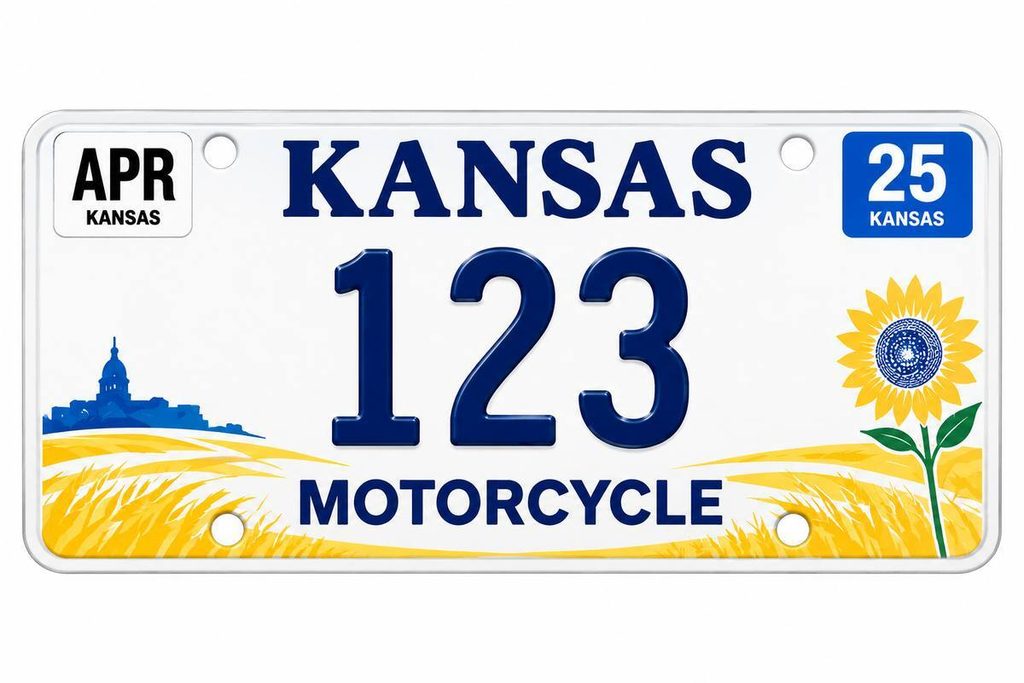
A current Kansas motorcycle license plate is a compact, motorcycle-specific plate rather than the standard passenger-vehicle plate. Kansas began issuing a new standard plate design in 2024, featuring the Kansas Statehouse dome inside an outline of the state, a yellow, white, and blue background, and the phrase “To the Stars” along the bottom. The Kansas Department of Revenue states that the new design is replacing older embossed plates, while a Digital Plate may be available as another plate option depending on current state requirements. Kansas law requires a license plate to display the assigned registration number, the state name or abbreviation, and applicable registration-year information.
Kansas Motorcycle Plate Size and Design
The Kansas motorcycle license plate uses a smaller format than a standard passenger-vehicle plate. Historical Kansas records show motorcycle plates with dimensions of approximately 4 × 8 inches, making the format suitable for motorcycle mounting space.
- Plate size: Historical Kansas motorcycle plates measured about 3 7/8 × 7 3/4 inches, commonly rounded to approximately 4 × 8 inches.
- Motorcycle-specific format: The smaller dimensions distinguish a motorcycle plate from the standard passenger-vehicle plate, which uses a larger format.
- Motorcycle plate design: Kansas motorcycle plates have changed through different production periods, with variations in lettering, number placement, county identification, and state branding.
- Older plate style: Earlier Kansas motorcycle plates commonly used embossed characters, giving the registration numbers and letters a raised appearance.
- CYCLE designation: Some historical Kansas motorcycle plates included a vertical CYCLE designation, helping identify the plate as a motorcycle registration plate.
- County identification: Older motorcycle plates used county information in different positions and formats, depending on the plate issue and production period.
- Current appearance: Newer Kansas plates use a flatter production style with printed or screened graphics rather than the raised embossed characters found on many older plates.
Motorcycle Plate Number, County Information, and Registration Details
The motorcycle plate number serves as the registration identifier assigned to the motorcycle. Kansas plate designs have changed over time, so the placement of registration and county information can vary between older and newer issues.
- Plate number: The assigned registration number identifies the motorcycle within the Kansas vehicle registration system.
- County information: County identifiers have appeared on Kansas motorcycle plates in different formats and locations over the years.
- State identification: Kansas plates identify the issuing state through the state name or approved state abbreviation.
- Registration information: Plate designs can include information connected with the motorcycle’s registration period, depending on the specific plate and registration system.
- Older vs. newer plates: An older Kansas motorcycle plate may feature raised, embossed numbers and letters, whereas newer production uses a flatter appearance.
- KS License Plates: The exact appearance of KS License Plates can vary by plate type, issue year, and whether the plate is a current or historical design.
Motorcycle License Plate Options
Kansas offers several Kansas License Plates Options for motorcycle owners, depending on registration type, eligibility, and the plate selected. The available choices can include standard motorcycle plates, personalized plates, military and veteran plates, and certain specialty plates. Each option can have its own eligibility rules, character limits, fees, and application requirements.
Standard Motorcycle Plates
The standard motorcycle plate is the regular plate option issued for a motorcycle registered in Kansas. Kansas motorcycle license plates use a motorcycle-specific format that is smaller than standard passenger-vehicle plates. The plate displays the assigned registration number and state identification. Standard plates are intended for ordinary motorcycle registration and do not require the owner to select a special plate category or personalized number.
Personalized Motorcycle Plates
A personalized motorcycle plate allows an eligible motorcycle owner to request a customized combination of letters, numbers, and spaces rather than accepting a randomly assigned registration number. Kansas DOR permits up to five letters, numbers, and/or spaces for a personalized motorcycle plate. The requested combination must meet Kansas requirements and be available for issuance.
- Kansas personalized plate: A personalized option for an eligible registered motorcycle.
- Custom motorcycle plate: Uses an owner-selected combination within the permitted character limit.
- Motorcycle plate number: The selected characters become the identifying number displayed on the plate.
- Availability: A requested combination must be reviewed and approved before issuance.
- Character limit: Motorcycle personalized plates may contain up to five letters, numbers, and/or spaces.
Military and Veteran Motorcycle Plates
Kansas provides distinctive plates for qualifying military service members and veterans, with certain plate categories available for motorcycles. Eligibility depends on the specific military or veteran designation and the documentation required for that category.
- Military plates: Available for qualifying military-related categories established by Kansas.
- Veteran plates: Offered to eligible veterans who meet the requirements for the selected designation.
- Motorcycle eligibility: Kansas law provides distinctive veteran plates for motorcycles, subject to the applicable requirements.
- Documentation: Proof of eligibility may be required based on the particular military or veteran plate.
Specialty Motorcycle Plates
Specialty motorcycle plates depend on the particular plate category offered by Kansas. Some specialty designs have specific eligibility requirements, application procedures, fees, or documentation. A motorcycle owner should check the requirements for the individual plate before selecting it. Availability can differ between specialty categories, so not every specialty plate offered for passenger vehicles is necessarily available in a motorcycle format.
Kansas Motorcycle License Plate Fees
The total Kansas motorcycle license plate fees can vary based on the registration transaction and the type of plate selected. A motorcycle owner may pay more than a basic plate-related charge, since the total amount can include registration, title, plate, personalized, specialty, state, county, and tax-related charges. Kansas Department of Revenue materials state that other registration, state and county fees and taxes are charged in addition to certain personalized and specialty plate fees.
Personalized Kansas Motorcycle License Plates
Personalized Kansas motorcycle license plates let eligible motorcycle owners select a custom combination of letters, numbers, and spaces instead of receiving a standard plate number. Kansas Department of Revenue allows personalized plates for motorcycles, with a separate personalization charge. The motorcycle must meet Kansas title and registration requirements, and the requested plate combination must follow state rules. Personalized plates are issued on five-year cycles, with the cycle beginning in a year ending in 0 or 5.
How Many Characters Can a Motorcycle Plate Have?
A Kansas personalized motorcycle plate can contain no more than five letters, numbers, and/or spaces. Symbols are not permitted. The five-character limit applies to motorcycle-size personalized plates, even though Kansas allows up to seven characters on personalized plates for autos and trucks. Examples could include combinations such as “KSMOTO” only if they meet the applicable character limit and state review requirements; a six-character combination would exceed the motorcycle limit.
Who Can Get a Personalized Motorcycle Plate?
A personalized motorcycle plate is available to a Kansas resident or to a qualifying military member who is not a Kansas resident but is stationed at a Kansas military base or office. KDOR requires a Kansas title in the applicant’s name or the leasing company’s name for the motorcycle receiving the plate. The motorcycle must be registered in a category eligible for personalized plates. KDOR specifically lists motorcycles among the vehicles that can receive personalized plates.
How to Apply for a Personalized Motorcycle Plate
The application is handled through the local county treasurer’s motor vehicle office. The applicant must have the appropriate Kansas title for the motorcycle and meet the state’s registration requirements. KDOR states that Kansas county treasurers process vehicle registration and personalized plate transactions. Once the application and required charges are processed, the personalized plate is produced for the vehicle. Applicants should confirm the plate combination, title information, registration status, and applicable fees with their county treasurer before submitting the request.
Lost, Stolen, or Damaged Motorcycle License Plate
A replacement motorcycle plate may be needed when a Kansas motorcycle license plate is lost, stolen, damaged, or becomes difficult to read. A plate with missing numbers, severe damage, or poor visibility should not simply be altered, repainted, cut, drilled, or modified by the owner. Changes can interfere with the plate’s identifying information and may create problems with its proper display. A lost motorcycle tag should be reported and replaced through the appropriate Kansas vehicle registration process.
When Is a Replacement Motorcycle Plate Needed?
A replacement may be appropriate when the original plate is lost, stolen, destroyed, or damaged to the point that its registration number or other required information cannot be clearly identified. A damaged license plate should remain identifiable and properly displayed until the replacement process is completed when possible.
How to Request a Replacement Plate
Kansas Department of Revenue lists the Replacement Plate and Additional Plate Request Form (D-5) among its vehicle forms. The motorcycle owner can use the applicable replacement process through the county treasurer’s motor vehicle office. The office can review the motorcycle’s registration record, confirm the vehicle information, and process the applicable replacement request and fees. The replacement plate becomes associated with the motorcycle’s existing registration record. Owners should use the replacement plate issued through the Kansas registration system rather than attempting to recreate or modify the original plate. This keeps the replacement plate connected with the correct vehicle and registration information.
Motorcycle Registration Renewal
Kansas motorcycle registration must remain current for a motorcycle to be legally operated on public roads. The registration renewal process keeps the vehicle record active and maintains the connection between the motorcycle, its registration record, and the motorcycle tag displayed on the vehicle. Renewal timing can depend on the vehicle’s registration record and the county handling the transaction. The owner may need current registration documentation, proof of insurance, and payment of the applicable registration fee and taxes or other charges.
Motorcycle Registration Renewal Period
- Check the expiration date: The motorcycle owner should check the current registration documentation for the expiration date.
- Complete renewal on time: Motorcycle tag renewal should be completed before the registration expires.
- Registration status matters: A physical license plate can remain attached to the motorcycle even after the registration expires.
- Plate and registration are connected: The plate identifies the registered vehicle, but the plate itself does not prove that the vehicle registration is currently active.
- Renewal timing: The applicable renewal period is based on the vehicle’s Kansas registration record.
What Is Needed for Renewal?
The exact requirements can vary based on the renewal transaction.
Items or information may include:
- Current registration information for the motorcycle
- Proof of insurance when required
- Owner identification for applicable transactions
- Vehicle information matching the Kansas registration record
- Registration fee and other applicable taxes or charges
- Renewal notice or registration details when required for the selected renewal method
Keeping the Motorcycle Plate Current
- Renewing registration: Keeps the motorcycle’s registration status current for the new registration period.
- Existing motorcycle tag: A new plate is not normally issued simply because the registration is renewed.
- Plate display: The existing motorcycle tag can remain on the motorcycle when the registration is renewed, subject to Kansas plate requirements.
- Registration record: Renewal updates the vehicle’s registration status rather than replacing the motorcycle itself or automatically changing its plate number.
- County treasurer: Kansas county treasurers handle vehicle registration and renewal transactions for vehicles registered in their counties.
Motorcycle License Plates vs. Other Kansas License Plates
Kansas motorcycle license plates differ from passenger, truck, trailer, and specialty plates mainly in their size, numbering format, eligibility, display requirements, and available personalization. Motorcycle plates use a smaller motorcycle-specific format, making them different from the larger plates used on many passenger vehicles and trucks commercial plate requirements may also differ because commercial vehicles follow their own registration category and rules. Trailer plates follow their own registration category, while specialty plates may use distinctive designs or eligibility requirements.
Frequently Asked Questions
Kansas motorcycle license plates, including plate size, registration fees, display requirements, personalized plate options, and character limits. Motorcycle owners can use these answers to get clear information about Kansas motorcycle registration, motorcycle tags, license plate costs, and plate formats. The questions focus on practical details that help explain the basic requirements and options associated with motorcycle license plates in Kansas.
What size is a Kansas motorcycle license plate?
A Kansas motorcycle license plate uses a smaller motorcycle-specific format than a standard passenger vehicle plate. Historical Kansas motorcycle plates have commonly measured about 3 7/8 × 7 3/4 inches, often described as approximately 4 × 8 inches. The exact appearance and dimensions can vary by plate issue and production period, so older Kansas motorcycle plates may look different from current versions.
How much does a Kansas motorcycle plate cost?
The annual Kansas registration fee for a standard motorcycle is $16. An all-electric motorcycle has an annual registration fee of $30. Other charges may apply, including the $5 state service fee, county transaction charges, title fees, taxes, or fees for personalized and specialty plates. A personalized motorcycle plate has a $45.50 personalization fee, separate from regular registration costs.
Do motorcycles need a license plate in Kansas?
A motorcycle operated on Kansas roads must have proper registration and a valid license plate displayed as required by state law. The motorcycle plate identifies the registered vehicle and connects it with the state registration record. Owners should keep the motorcycle registration current and display the plate in the required rear position so the registration number remains clearly readable.
Can I get a personalized motorcycle plate in Kansas?
Kansas allows personalized license plates for motorcycles. The applicant must meet the state eligibility requirements, and the motorcycle must have a Kansas title in the applicant’s name or qualifying leasing arrangement. Personalized motorcycle plates allow the owner to select an available combination of letters, numbers, and spaces, subject to Kansas plate rules and approval.
How many characters can be on a Kansas motorcycle plate?
A Kansas personalized motorcycle license plate can contain up to five characters. The allowed characters are letters, numbers, and spaces. Symbols are not permitted. The selected combination must meet Kansas requirements and cannot be rejected for prohibited or inappropriate wording. The five-character limit applies to personalized motorcycle plates and should not be confused with the format of standard motorcycle registration numbers.