
License plates are becoming more connected with modern vehicle technology, giving Kansas drivers new options for displaying registration information. Digital plate technology can use electronic displays to show required vehicle details, registration status, and other approved information. Kansas digital license plates are different from standard metal plates because they rely on electronic screens and connected systems. Drivers researching this technology can compare digital options with traditional Kansas plates, review possible requirements, and see how electronic registration displays may fit into current vehicle registration practices.
License plates serve as an important identification feature for registered vehicles, and digital versions introduce technology into this familiar system. A digital license plate can display registration information electronically rather than relying on a fixed printed design. For Kansas vehicle owners, questions may include availability, eligibility, registration requirements, costs, privacy features, and applicable state rules. Reviewing these areas can help readers distinguish digital plate technology from standard Kansas license plates and identify which information applies to vehicle registration, plate display, and electronic registration systems.
How to Get a Kansas Digital License Plate
Getting a Kansas digital license plate starts with completing the normal vehicle registration process through the appropriate county treasurer motor vehicle office. The county treasurer handles registration records, plate transactions, required documentation, and applicable fees. Vehicle owners should have valid Kansas auto insurance and the documents required for their transaction before visiting the county office. A Kansas license plate may be issued along with a temporary plate when permitted while permanent registration is being processed. Availability, eligibility, fees, and production requirements can vary by plate type, so current details should be confirmed with the Kansas Department of Revenue or county treasurer.
- Official Kansas DOR Digital License Plate page:
- https://www.ksrevenue.gov/dovdlppfaq.html
- Digital License Plate Production: Kansas uses a digital production process for certain license plates. This means the plate information is printed using a digital production method rather than the older manufacturing process.
- County Treasurer’s Role: The county treasurer motor vehicle office handles the vehicle registration and applicable license plate transaction. The county office submits the plate order when required.
- New Vehicle Registration: When registering a new vehicle, the owner completes the required registration process through the county treasurer’s office. Required ownership documents, identification, insurance information, and applicable fees may be needed.
- Temporary Plate: A temporary license plate may be provided when applicable while the permanent plate is being produced and delivered.
- Permanent Digital Plate: After the plate order is processed, the permanent digital license plate is produced and sent according to Kansas DOR procedures.
- Plate Transfer: If an owner transfers an existing Kansas plate to another vehicle, the transaction is handled through the county treasurer’s motor vehicle office. The requirements can differ from ordering a new plate.
- Personalized Plates: Personalized plate requests are subject to availability and Kansas requirements. The county treasurer’s office processes the applicable transaction.
- Specialty Plates: Specialty plates can have their own eligibility and application requirements. The production process depends on the specific plate selected.
- Where to Order: Vehicle owners should contact or visit their county treasurer motor vehicle office for the actual registration and plate transaction.
Digital License Plate Design and Appearance
A digital Kansas state license plate does not necessarily have a completely new visual design simply because it is produced digitally. Digital production refers mainly to the manufacturing method used to place the letters and numbers on the metal plate. Kansas uses a digital printer to print the plate information onto a background material, which is then bonded to the metal plate. The finished plate has a flat surface rather than raised characters. Standard and specialty plates can retain their designated colors, graphics, wording, and other visual features under this production method.
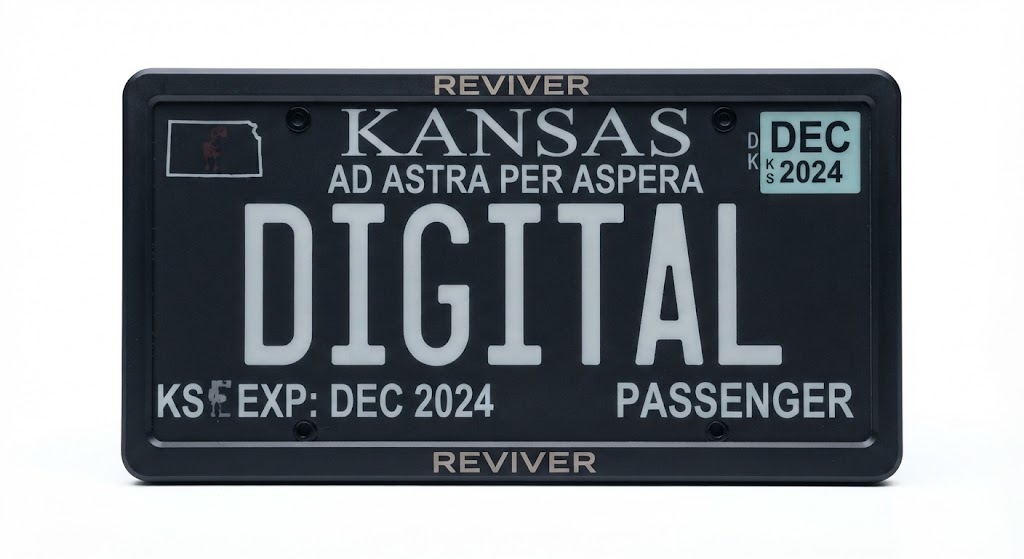
Flat Characters vs. Raised Characters
The main physical difference between older and digitally produced Kansas plates is the character style:
- Flat characters: Digital printing places letters and numbers directly onto the plate material.
- Embossed characters: Older Kansas plates used raised letters and numbers pressed into the metal.
- Digital printing: Kansas uses a print-on-demand process that produces a flat plate rather than raised characters.
- Plate appearance: A laminate covers the printed surface, helping protect the characters from weather and other environmental exposure.
- Existing plates: Current embossed plates with valid registration decals remain valid and do not need replacement simply because Kansas uses digital production.
Standard and Specialty Plate Designs
Kansas uses digital production for different plate categories, so digital manufacturing does not mean every plate has the same appearance:
- Standard plate: Uses the approved Kansas standard plate design.
- Specialty plates: Feature approved themes, organizations, military affiliations, colleges, or other designated designs.
- Personalized plates: Allow approved letter and number combinations within Kansas character limits.
- Digital production flexibility: The print-on-demand process lets Kansas produce different plate designs and combinations as needed.
- Visual design: The manufacturing process can change the character style from raised to flat without requiring the overall plate design to be completely different.
How Digital License Plate Production Works
Kansas digital license plate production starts when a vehicle registration or eligible plate request is processed through the county treasurer’s motor vehicle office. The information from the registration is used to create the plate through a digital printing process. Kansas uses a flat metal plate with printed letters and numbers rather than the older embossed format. The printed material is covered with laminate for protection, then the finished permanent plate is mailed to the registered mailing address. This process connects vehicle registration, plate production, digital printing, and shipment in a single production system.
Vehicle Registration or Plate Order
The process begins at the county treasurer’s motor vehicle office when a vehicle is registered or a qualifying plate is requested. A standard plate can be issued with a new vehicle registration, and specialty or personalized plates can be requested through the appropriate registration process. The county office handles the registration records and submits the plate order for production. For a new vehicle, the owner provides the required registration documents and proof of insurance. The selected plate type is then associated with the vehicle registration before production begins.
Plate Information Is Sent for Production
After the registration is processed, the required plate information becomes part of the plate order. This includes the assigned plate number and information connected with the vehicle registration. The plate production system uses these details for digital printing. For specialty or personalized plates, the approved plate information is used in the same production process. Kansas uses this system to produce plates based on registration needs instead of keeping large quantities of finished plates in storage.
Digital Printing on the Plate
The digital printing stage creates the visible information on the metal plate. Kansas uses a digital printer to print the letters and numbers onto a background material. That material is then bonded to the metal plate, producing a flat surface rather than raised or embossed characters. This method allows plate information to be produced as part of the registration process. The finished plate has the required identifying information printed directly through the digital plate production system. This production method applies to Kansas plates issued through the digital system.
Laminate Protection
After the plate information is printed, laminate material covers the printing. Kansas states that the laminate helps protect the printed surface from the elements. This protective layer is part of the digital plate manufacturing process and helps shield the printed letters, numbers, and background from regular environmental exposure. The laminate is applied before the finished plate is prepared for shipment to the registered mailing address.
Mailing the Permanent Plate
Once production is complete, the permanent plate is prepared for mailing. Kansas sends the plate to the mailing address provided during the registration process. The Kansas Department of Revenue states that customers may receive notification when the plate is ordered and when it is shipped. Shipment information can include tracking details, giving the recipient information about the delivery. The permanent plate is expected to arrive within about three weeks of the order under the digital plate production process. If a plate is not available for immediate display, the county office can provide a paper temporary plate for use until the permanent plate arrives.
How Much Do Kansas Digital License Plates Cost?
A Kansas digital license plate does not carry a separate customer fee simply for being produced through digital printing. The digital production method is part of the state’s plate manufacturing process. The amount a vehicle owner pays depends on the registration, plate type, taxes, and other applicable charges connected with the vehicle. Kansas Department of Revenue directs motorists to their local county treasurer’s motor vehicle office for questions about registration fees and taxes.
How Long Does It Take to Receive a Digital License Plate?
The delivery time for a Kansas digital plate depends on the production and mailing process after the county treasurer processes the registration or plate order. Kansas Department of Revenue states that a permanent plate should arrive within three weeks of being ordered. During this period, the plate is digitally produced, prepared for shipment, and mailed to the address provided during registration. A paper temporary plate may be provided when a permanent plate is not available for immediate display.
Permanent Plate Delivery Time
Kansas states that the permanent plate should arrive within three weeks of the order date. After the county treasurer’s motor vehicle office submits the plate order, the plate goes through digital production before shipment. The permanent plate is then mailed to the registered mailing address. The actual delivery date can vary based on production and postal delivery, so the three-week period is the stated expected timeframe rather than a guaranteed arrival date.
Can You Track the Plate?
Kansas provides shipment notifications for digitally produced plates. Customers may receive an email or mobile notification when the plate is ordered and when it is shipped. A tracking number may be included with the shipment notification, allowing the customer to check the plate tracking information and shipment status. This can help confirm when the permanent plate has entered the mailing process.
What If You Move Before Delivery?
Kansas states that a plate is not forwarded if the recipient moves before delivery. If the mailing address changes before the plate arrives, the plate can be returned to the Kansas Division of Vehicles. The owner should update the mailing address with the appropriate county motor vehicle office or Division of Vehicles and contact the state about having the returned permanent plate mailed again.
Plate Replacement and Digital Plates
Kansas license plate replacement can involve different situations, including a damaged or unreadable plate and the replacement of older standard embossed plates. Kansas began using digital plate production in 2018, changing how many new plates are manufactured, but this did not mean every existing embossed plate had to be replaced. A separate statewide replacement program began in 2024 for standard embossed plates that had deteriorated and lost reflectivity. For certain vehicle categories, a Commercial Plate may have different replacement considerations based on its registration type. Knowing the difference between digital production, normal plate replacement, and the 2024 embossed plate replacement program helps explain which Kansas plates may need replacement and why.
Replacing a Damaged or Unreadable Plate
A damaged plate or illegible plate can be replaced through the Kansas county motor vehicle office.
Kansas Department of Revenue provides the following requirements for a replacement request:
- Damaged plate: A plate that is damaged or worn and can no longer be used properly may qualify for replacement.
- Illegible plate: Replacement can be requested when the plate characters can no longer be read.
- Current registration: Bring the current vehicle registration when requesting a replacement.
- Proof of insurance: Current proof of insurance is required for the replacement transaction.
- Existing plate: The current damaged or unreadable plate should be presented.
- Replacement fees: Any applicable fees must be paid.
- Temporary plate: A 60-day temporary plate is issued until the replacement plate arrives by mail.
- Plate number: The same plate combination may be retained depending on the type of plate being replaced.
Kansas’ Replacement of Older Embossed Plates
Kansas began replacing standard embossed plates in January 2024 after the older plates experienced deterioration and reduced reflectivity. Kansas Department of Revenue states that embossed plates can lose about 50% of their reflectivity after five years, which can make them harder to read, particularly at night.
The replacement process works through normal registration renewal:
- Replacement program: The program targets standard embossed plates.
- Renewal: An affected registration is flagged when the vehicle owner renews.
- Temporary tag: The owner receives a temporary tag and registration decal.
- Permanent plate: The replacement plate is mailed after the renewal is processed.
- New plate number: The replacement plate receives a new alphanumeric combination.
- New standard design: The replacement uses the newer Kansas standard plate background.
Does Every Old Plate Need Replacement?
No. Kansas’ 2018 digital production transition did not require every existing embossed plate to be replaced. Existing embossed plates with current registration decals remained valid.
The three situations should be kept separate:
- 2018 digital production: Kansas changed the plate manufacturing process from embossed characters to digitally printed, flat characters for plates issued from August 1, 2018.
- Normal replacement: A damaged, worn, or illegible plate can be replaced through the county motor vehicle office.
- 2024 statewide replacement program: Kansas began replacing older standard embossed plates due to deterioration and reduced reflectivity.
- Specialty and personalized plates: The 2024 program specifically targets standard embossed plates, rather than every plate type.
Digital License Plates vs. Embossed Plates
Kansas has used both traditional embossed license plates and newer digitally produced plates. The main difference is the way the registration characters are formed on the plate. An embossed license plate has raised letters and numbers pressed into the metal, whereas a digital plate has its characters printed directly onto the plate surface. Kansas began using digital plate production for plates issued on or after August 1, 2018. This production change created a flat license plate appearance without changing the basic requirements for registration or plate display.
Digital License Plates and Plate Display Rules
Kansas digital license plates must be displayed according to the same vehicle plate requirements that apply to other Kansas License Plates. Digital printing changes the way a plate is produced, but it does not remove the requirements for proper plate display, license plate visibility, and license plate legibility. A permanent plate must be securely mounted in the required location, and a temporary plate may be used when the permanent plate has not yet arrived. The plate must remain visible, readable, and free from obstructions during the current registration period.
Permanent and Temporary Plate Display
Kansas digital license plates must follow the same basic plate display requirements as other Kansas License Plates. A permanent plate must be securely fastened to the vehicle in the required position and remain clearly visible and legible. For most vehicles, the assigned plate is displayed at the rear during the current registration year. When a permanent digital plate has not arrived, a temporary plate may be displayed as directed by the issuing authority. The plate must remain unobstructed so its identifying characters and required registration information can be clearly seen.
License Plate Visibility and Legibility
Kansas law requires proper license plate visibility and license plate legibility during vehicle operation. A plate should not be covered, blocked, altered, or positioned in a way that makes its characters difficult to read. Frames, covers, or other materials must not interfere with the required plate display. Kansas law provides certain exceptions for specific vehicle types and plate situations, but the standard requirement remains that the assigned plate must be securely displayed and clearly readable. These requirements apply to digitally printed flat plates and older embossed plates alike.
Frequently Asked Questions
Kansas digital license plates, including their production process, flat design, replacement requirements, fees, and plate display. These answers explain how digital plates differ from older embossed plates and what vehicle owners should know about their use in Kansas.
What are Kansas digital license plates?
Kansas Digital License Plates are license plates produced through the Kansas Department of Revenue’s Digital License Plate Production process. The process uses digital printing to place letters and numbers onto a plate background, which is then bonded to the metal plate. A protective laminate covers the printed surface to help protect it from weather and other elements.
Are Kansas digital license plates electronic?
No. A Kansas digital license plate is not an electronic license plate or a connected display. The term “digital” refers to the production method used to print the plate. Letters and numbers are printed onto the plate material, creating a physical flat plate. It does not contain a screen, electronic display, GPS system, or wireless tracking feature.
When did Kansas start using digital license plates?
Kansas began using digital plate production for license plates issued on or after August 1, 2018. The Kansas Department of Revenue introduced the print-on-demand process to produce plates as needed and reduce plate inventory and waste. New plates issued under this process have a flat printed surface instead of raised characters.
Are Kansas digital plates flat or embossed?
Kansas digital plates are flat license plates rather than embossed plates. The digital production process prints the letters and numbers onto the plate surface, so the characters are not raised. Older Kansas plates used embossed characters that were formed into the metal. Both styles can be found on Kansas vehicles, depending on when the plate was issued and whether replacement rules apply.
Do I have to replace my old embossed Kansas plate?
An embossed license plate with a current registration decal did not have to be replaced simply because Kansas introduced digital production. Kansas later began a separate replacement program for standard embossed plates in January 2024. This program targets standard embossed plates that need replacement because of deterioration and reduced reflectivity.